I was looking for fruit at the store the other day and ran across these guys. I am a fan of pears and thought I would give them a shot. I picked out two that I thought looked ripe.
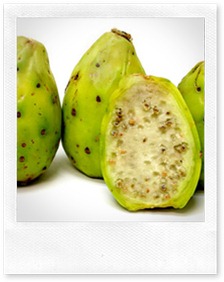
I was not really sure where to start with these. I had heard you need to be super careful and wear gloves while handling. However, at the store, I simply picked them up, inspected them and placed them in the bag – no issues. So, I assumed that by the time they got to the store, the pricks had already been removed.
I decided to peel the fruit like I would peel an apple. This worked fairly well, and I discovered that the inside was riddled with seeds (see left). Now, I am a fan of eating seeds. I eat apple, orange and pear seeds as a normal course of eating those fruits. These, however, seemed very hard. Super hard. So rather than risk dental issues, I tried to eat around them. This ended up being a time-consuming, frustrating process. The fruit has a great taste, but is not fun to eat.
I did some research and learned that some people do in fact eat these seeds. When I eat the second, I will give it a shot. Hoping this turns out to be a better experience.
Information – courtesy of Specialty Produce:
Seasons/Availability
Cactus Pears are available September through April.
Description/Taste
Actually a berry, Green Cactus pears are produced from yellow, red or purple flowers that grow on the prickly pear cactus. Egg-shaped, this fruit is a ocher yellow or chartreuse inside and out. Encased in a prickly firm shell, it has a seedy pulp that offers a watermelon-like flavor and aroma when ripe.
Nutritional Value
Low in calories, one Cactus pear fruit contains about 45 calories. Rich in fiber and low in sodium, this fruit offers a good source of vitamin C and potassium.
Applications
Note: Care needs to be taken when handling cactus pears. Hold with tongs or rubber gloves to prevent penetration of prickly fibers into fingers; gently rinse under cool running water. Cut off ends, slice open end to end and gently peel away the skin of the cactus pear by slipping the tip of a knife under the skin. Scoop out pulp and seeds with a spoon; slice as desired. Best chilled, Green Cactus pear fruit is a perfect addition to fruit or chicken salad. Add the pureed fruit to punch, cocktails and sparkling wine. Make a delicate tasting marmalade or jam to serve atop bagels, muffins, or breakfast breads. Serve as an edible garnish to dress up sandwiches and salads. To store, refrigerate ripe fruit up to a week.
Geography/History
Native to the Americas, Green Cactus pears has long been used to promote healing, specifically for inflammatory skin disorders, eye inflammation, intestinal tract dysentery, urinary tract inflammation, burns, and joint and muscle inflammation. Growing in all of the deserts of the American Southwest, the prickly pear cactus has been a Native American staple food for centuries as both its pads and fruit are edible.
 17 Stones